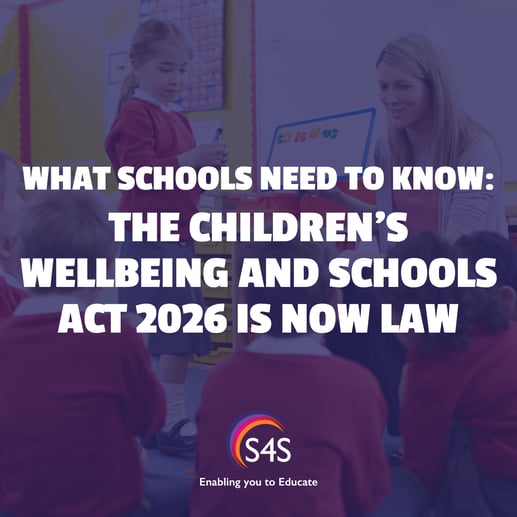
The Children’s Wellbeing and Schools Act 2026 received Royal Assent on 30th April 2026, marking one of the most significant education reform programmes in recent years. The legislation introduces new powers for government to reshape safeguarding expectations, standardise key school policies, and bring greater alignment across different types of state-funded schools.
While the Act is now law, schools are not expected to make immediate operational changes. Most requirements will be introduced gradually through statutory guidance and secondary legislation, much of which is still under consultation. However, the direction of travel is now clear, and schools are being encouraged to begin early planning.
Below is a breakdown of the key areas schools should be aware of.
Allergy safety (“Benedict’s Law”)
From September 2026, schools will face strengthened legal duties around allergy management. These are expected to be supported by updated statutory guidance from the Department for Education.
Likely expectations include:
• Clear and consistently maintained individual healthcare plans• Enhanced staff training and allergy awareness
• Stronger risk assessment procedures
• Improved emergency response planning, including use of auto-injectors where appropriate
A consultation on the draft guidance remains open until mid-May 2026, meaning final requirements may still be refined.
Smartphone use in schools
One of the most immediately visible changes is the formalisation of smartphone restrictions.
Current non-statutory guidance will become statutory, meaning schools will be required to:
• Implement a clear ban on smartphone use during the school day• Enforce consistent rules around possession and usage
• Apply limited exemptions (such as sixth form students or medical needs)
This move effectively codifies approaches already adopted by many schools, but now makes compliance mandatory.
Social media restrictions for under-16s
The Act also provides the legal framework for future restrictions on social media use among under-16s.
Although specific mechanisms have not yet been finalised, schools should anticipate:
• Greater emphasis on online safety education• Potential changes in how pupils access digital platforms
• Increased safeguarding responsibilities linked to digital behaviour
Further consultation will determine how these powers are implemented in practice.
School uniform expectations
New statutory guidance on school uniform affordability and consistency is expected from September 2026.
Proposals include:
• Limiting compulsory branded items to three or fewer• A possible allowance for a fourth item in secondary settings (e.g. a tie)
• Stronger expectations around affordability and accessibility for families
Schools are being advised to review uniform policies early, especially given supplier contracts and lead times for changes.
Free breakfast club provision (primary schools)
A major operational change will require all state-funded primary schools to provide free breakfast clubs.
The rollout will be phased, with guidance expected to cover:
•. Minimum provision standards• Equal access for all pupils
• Staffing and operational requirements
• Links to wider wellbeing and attendance strategies
This policy represents a significant expansion of school-based wraparound provision.
Greater alignment for academies
The Act also seeks to reduce structural differences between academies and maintained schools. Key changes include:
• Mandatory statutory induction for Early Career Teachers
• Alignment with the national teacher pay framework
• Requirement to follow the national curriculum
These measures signal a shift towards a more unified national education system.
Trust-wide Ofsted inspections
For the first time, legislation establishes a basis for Ofsted to inspect academy trusts as a whole, rather than only individual schools.
No inspection framework or timeline has yet been confirmed, but consultation is expected before implementation begins.
What this means for schools
Although there are no immediate compliance deadlines, the Act sets out a clear programme of reform that will gradually reshape school operations over the coming years.
Schools should now:
• Stay informed as statutory guidance is published• Begin reviewing policies on uniforms, mobile phones, and allergy management
• Assess operational readiness for breakfast club provision
• Ensure safeguarding and leadership teams are fully briefed on upcoming changes
Looking ahead
As secondary legislation and consultation outcomes are published, schools will need to translate these broad policy directions into practical systems and procedures. Early preparation will be key to ensuring smooth implementation and avoiding last-minute operational pressure.
The Children’s Wellbeing and Schools Act 2026 represents a significant step towards a more standardised and centrally aligned education system, with a strong emphasis on safeguarding, wellbeing, and consistency across all state-funded schools.
Need support with safeguarding?
If your school or trust is reviewing its safeguarding approach in light of the upcoming changes, it’s important to ensure your policies, training, and procedures are fully aligned with evolving expectations.
We support schools with:
- Safeguarding audits and policy reviews
- Staff training and awareness
- Practical implementation of statutory guidance
- Ongoing advice and compliance support
To find out how we can support your setting, get in touch with our team for a confidential conversation.


Dr Sandra Wiseman
Doctorate in Education, Masters in School Improvement, NPQH.
Source: https://bills.parliament.uk/bills/3909/publications